A fake bank adviser calls or texts while displaying your bank's number. This is spoofing: the displayed identity has been forged. The scammer creates urgency around supposed fraud or a blocked account to make you read out a code, approve a transfer or install remote access software. Do not disclose a password or verification code to an unexpected caller, or install software to supposedly secure your account. Hang up and contact the bank using the number printed on your card or its official app that you already have.
Cybermalveillance.gouv.fr's guide to fake bank adviser fraud describes this pattern. This article helps you recognise it, respond during the call and reduce the information that makes targeted scams more convincing.
At a glance
- Spoofing: the displayed number or sender is not proof of identity.
- Warning signs: urgency, secrecy, verification codes, a transfer to a supposed safe account or remote access software.
- During the call: approve nothing, hang up and contact the bank through a channel you already trust.
- Afterwards: secure your card, contact the bank, report the incident and check known breaches.
- Prevention: reduce exposed phone numbers and emails on broker sites and in directories.
How spoofing works
Spoofing means forging the number shown on your phone or a text's sender identity. You may see the bank's name or even your local branch's number. That does not establish who is actually calling.
| Channel | What you see | What may be happening |
|---|---|---|
| Voice call | A bank name or familiar local number | The displayed number is spoofed |
| Text | A security alert, short number or bank name | A link or callback leads to a fake service |
| An address resembling your bank's | A link leads to a fake login page |
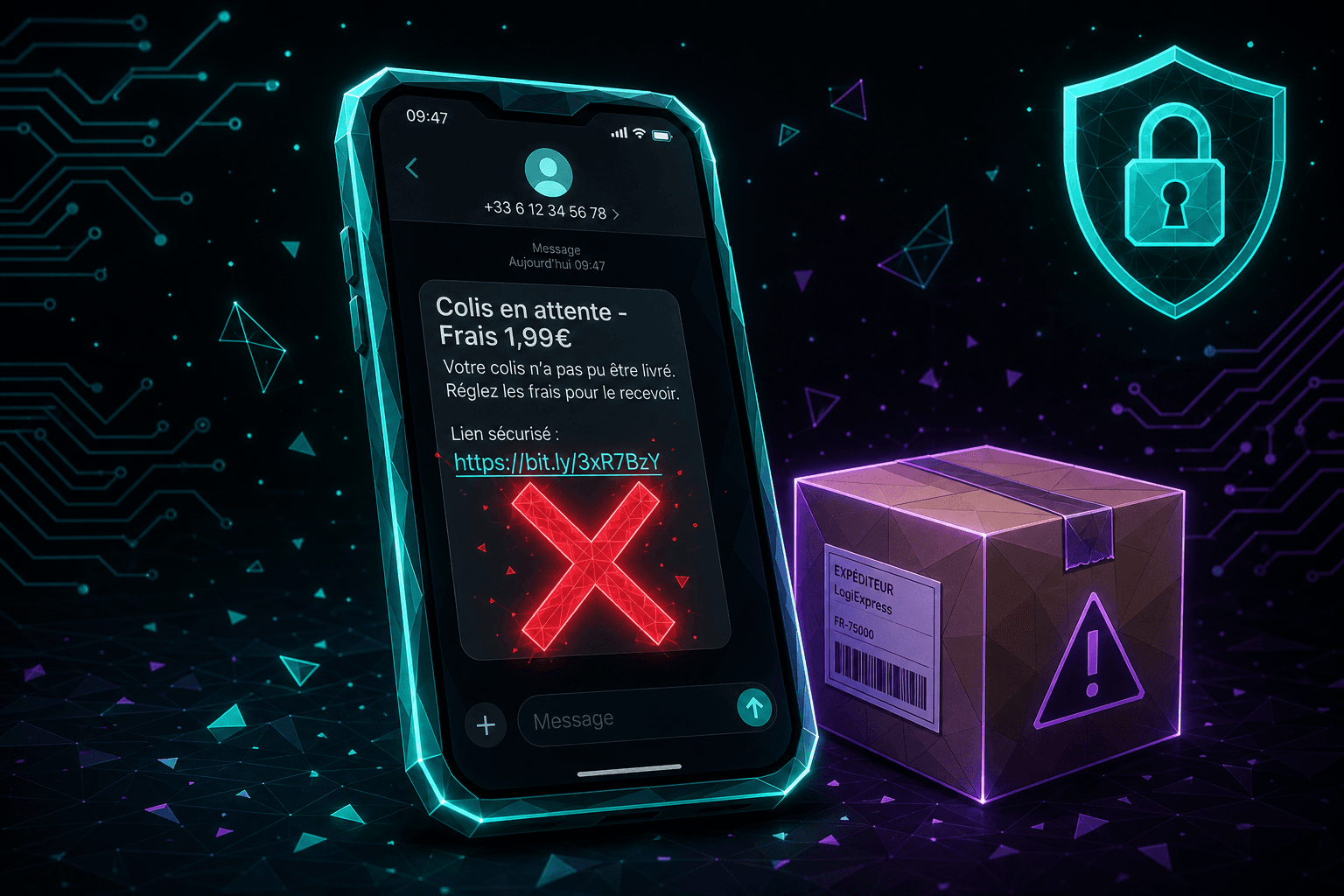
Scammers may combine data already circulating: your name, phone number and sometimes your bank's name. It might come from a breach, a broker or an earlier parcel text scam. Knowing your details does not prove that a caller works for your bank.
The displayed number is a clue, not identification. Apply the same care to a delivery text, calls after a breach or prohibited marketing calls.
Seven warning signs
- Extreme urgency. “You have ten minutes or your account will be emptied.”
- Secrecy. Instructions not to tell a relative or your usual adviser.
- A text code or in-app approval. “Read me the code you just received.” The code may authorise an operation, rather than protect you.
- A transfer to a supposed security team using a mobile or unfamiliar number.
- Installing AnyDesk, TeamViewer or an app outside official stores at the caller's request.
- A transfer to an escrow or safe account. This is a common scam story.
- Threats of legal action, seizure or account closure if you refuse.
Even a familiar number is not a guarantee. You can use Stop unwanted calls to check a marketing number, but that does not authenticate a banking call.
What to do during the call
- Approve nothing: no code, transfer or installation.
- Say you will call back yourself, then hang up. You do not need to justify it.
- Dial the number printed on your card or open the banking app you had before the call. Do not use the caller's number or a link received by text.
- If you have already shared information, contact your bank immediately to secure the account and card. If remote access may be involved, change passwords from another trusted device.
The key point in the Cybermalveillance guidance is that a scammer uses requested codes and approvals to carry out the fraud.
After an attempt, or if you have already paid
Act promptly. Service-Public's card fraud guidance explains reporting and dispute procedures in France.
| Action | Purpose |
|---|---|
| Block the affected card | Use your bank's official number or blocking service. In France, the interbank service is 0 892 705 705, available 24 hours a day with premium call charges. Keep your reference number. |
| Contact the bank through an official channel | Ask about stopping transfers, disputing transactions and opening a fraud case. |
| Report the message or site | Use Phishing.fr for phishing sites and emails, and 33700 for suspicious texts. |
| Get guidance from Info Escroqueries | In France, 0 805 805 817 is a free call and service. |
| Report the crime to police or gendarmerie | Keep evidence for both the authorities and your bank. Also read about identity theft if an account, loan or phone line was opened in your name. |
| Review known breaches | Identify possible exposure of your name, number or email, without assuming a particular breach caused the call. |
If you entered a password, treat it as compromised: change it everywhere you reused it and enable two-factor authentication.

Reduce personal data exposed online
When fewer phone numbers, email addresses and identity details are available on the public web, in directories and through brokers, there is less information to personalise a call. This is not a guarantee against scams. It reduces what is readily available to make them convincing, just as with unwanted calls and texts after a breach.
- Run a free digital footprint scan covering the public web, brokers and known breaches.
- Send erasure requests to the sources you select.
- Remove your number from Pages Blanches and Pages Jaunes and the 118 712 reverse directory.
Data Knight does not block banking calls and does not replace your bank. We help map where your details appear and request their removal. Caution during calls remains essential.
Official sources
The French source article was checked on 7 September 2026 using:
- Cybermalveillance.gouv.fr's fake bank adviser fraud guide;
- Service-Public's card fraud guidance;
- the reporting service Phishing.fr;
- Signal Spam for unwanted email reporting.
Want to see what publicly available information could be linked to your name? Start your free scan.
See also: Parcel text scams · Identity theft · Check for a data breach · Leaked passwords · Calls and texts after a breach · Unlawful marketing calls