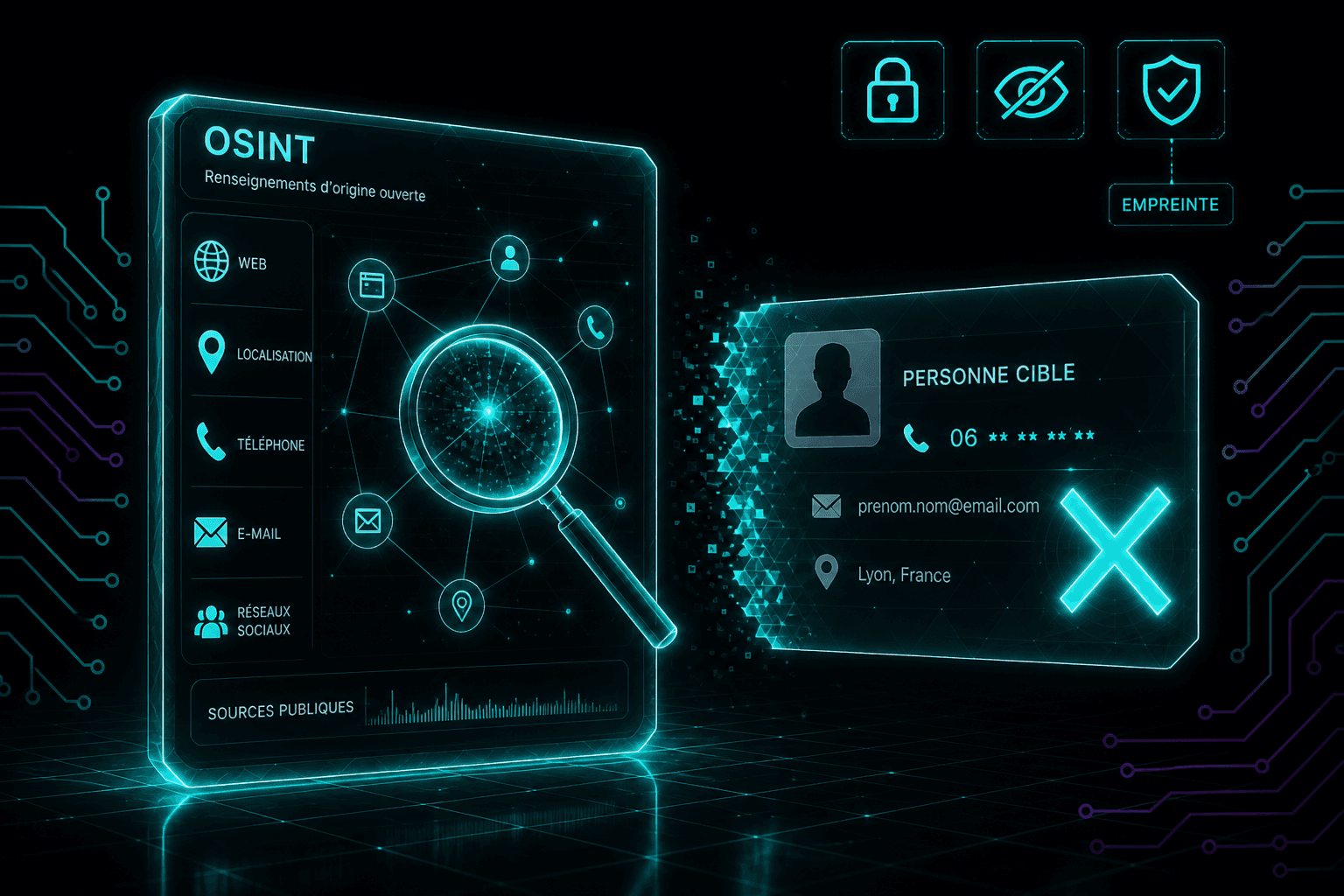
Your personal information can circulate through commercial databases and public websites without you having a clear view of who holds it. A data removal service helps identify supported exposures and submit requests on your behalf. Depending on its scope, it may address data brokers, public pages, search results or some social content. It can reduce the work involved in managing separate requests yourself.
This guide explains how these services work, how their scope differs and what to check before paying in France or the European Union.
If Incogni is your starting point, our Incogni alternatives in France comparison organises options by need, country coverage and payment model.
The essentials
| Point | What it means |
|---|---|
| Brokers aggregate information | They can collect names, addresses, phone numbers, professional records and other profile information for different commercial uses |
| A removal service manages requests | Depending on the plan, it finds supported records and submits opt-outs or GDPR erasure requests |
| GDPR provides an erasure right | Article 17 applies in defined circumstances, with exceptions. See the official regulation |
| Manual work needs follow-up | Requests may need verification, reminders and later checks |
| Records can reappear | Periodic checks can identify records imported again or appearing on another source |
| Plans cover different sources | People-search sites, brokers, public pages and social accounts are distinct areas of coverage |
What is a data removal service?
A data removal service helps identify personal information and request its removal from supported online databases or websites. Some also assist with search-result delisting. It acts with your authorisation, so you do not need to navigate every request process alone.
The data broker problem
Data brokers may build profiles from names, addresses, phone numbers, dates of birth, professional histories and purchasing information. Uses vary, from marketing to identity checks. You may never have dealt directly with many of these organisations.
The problem is visibility: it can be difficult to know which records exist, where they came from and how they are used. Lack of direct consent does not by itself establish that every record is unlawful, because other legal bases may apply. Our data broker guide explains the ecosystem.
What “removal” really means
Removal is not a guarantee that your data disappears forever from the internet. A request being sent is also not the same as data being erased. A useful service distinguishes requests, responses, confirmations and checks.
Applicable rights depend on the organisation, processing and jurisdiction, including the GDPR in relevant European contexts and rights under California privacy law. Under Article 17, erasure is required where the legal conditions apply and no exception overrides them.
A suitable provider should explain which process applies, what information is necessary and how it handles unanswered or refused requests.
Tip: an initial scan can help you see supported findings before subscribing. Record the starting position so that you can assess later changes. Data Knight offers a free assessment.
Coverage varies widely. Some plans focus on people-search websites; others include public pages, brokers or social accounts. Providers count “sources” differently, so a headline total is not a reliable comparison by itself.
How does a data removal service work?
The general sequence is to find relevant records, review the findings, obtain any required authorisation and submit an appropriate request.
Step by step
- Initial check. You provide supported identifiers such as a name, email, address or phone number. Check why each item is needed before sharing it.
- Exposure report. The service shows supported findings and available details. Some services contact a catalogue proactively instead; ask which approach is used.
- Requests. The provider submits an opt-out, objection or erasure request under the relevant process and your authorisation.
- Follow-up. Responses, verification steps and refusals are recorded. Reminders or escalation may be available within the plan.
- Further checks. A recurring service can look for reappearances or new supported findings.
GDPR requests
For processing covered by the GDPR, the appropriate rights and grounds matter. An organisation normally must respond to a rights request within one month. A conditional extension is possible, and the response deadline is not a guarantee that every request will result in erasure.
Data Knight's request workflow uses a mandate and applicable legal grounds. Read our method for its scope and limits.
In California, public mechanisms such as the California Privacy Protection Agency's DROP programme provide another route for eligible residents. Its eligibility, participating broker rules and implementation timetable should be checked with the agency. It is not a universal service for residents of every country.
| Method | Scope | Legal basis | Your work |
|---|---|---|---|
| Manual request | The organisations you identify | The same applicable rights can be exercised directly | Research, sending and follow-up |
| Public programme | Defined participants and eligible residents | The relevant programme and privacy law | Registration and any required steps |
| Basic commercial service | Its supported source list | Depends on the request and jurisdiction | Check authorisation and remaining manual actions |
| Managed removal with monitoring | Supported sources and recurring checks | Applicable rights, including GDPR where relevant | Review findings, authorise work and complete verification |
A manual request does not lose legal force because you sent it yourself. Paying an intermediary buys assistance, not stronger statutory rights.
Potential benefits
Privacy and security
- Less exposed information: removing eligible records can reduce information available for some forms of impersonation or targeting.
- Addressing unwanted contact: requests can limit some marketing uses, but cannot guarantee an end to spam or phishing.
- More control of public visibility: source removal and eligible search delisting can address exposed contact details.
- Reduced doxxing exposure: limiting publicly accessible details can help, without replacing safety support in a threatening situation.
- Organised exercise of rights: a provider can help coordinate requests to multiple organisations.
Saving time
Researching contact channels, filling in forms, completing verification and tracking responses takes time. The workload depends on your records and the recipients; there is no universal number of hours a service will save.
Managed work may offer:
- fewer repeated forms to complete yourself;
- checks of additional supported sources;
- a dashboard separating pending, confirmed and refused requests;
- organised handling of several recipients at once.
Tip: ask about follow-up and reappearances, not only the number of brokers listed at signup. Recurring monitoring can be useful, but a defined one-off service may be enough for a limited need.
Assess effectiveness from documented results for your own records. A general claim that “automation works better” does not establish how well a particular provider handles your sources.
Mistakes to avoid
Common misunderstandings
- “It is gone forever.” Brokers may refresh records from registries, partners or other databases. Reappearance is possible.
- “All services cover the same sources.” Check actual source lists, countries and supported requests.
- Confusing alerts with action. A notification does not itself remove information.
- Expecting complete disappearance. No service can guarantee removal of everything, including lawfully retained or public-interest content.
Mistakes when choosing
- Comparing only price. Check the work included, renewal cost and whether you need recurring monitoring.
- Assuming all opt-outs are voluntary. Some opt-out and objection rights are legally enforceable; the applicable law matters, not the label used on the form.
- Ignoring the provider's own privacy practices. Read what it collects, its security measures, processing locations, subprocessors and retention rules.
- Skipping the initial assessment. A report or clear description of coverage helps explain what you are buying.
- Never checking progress. Even managed requests can require your verification or a decision on a refused case.
To compare international services and Data Knight's approach, see our removal service comparison. It is published by Data Knight, one of the providers discussed.
How to choose in 2026
Criteria to assess
- Relevant coverage. Does the service address the brokers, public pages, search results or social accounts that matter to you? An arbitrary minimum source count is not a substitute for relevance.
- Legal process. Which rights or opt-out procedures will it use for your situation?
- Managed work. Who prepares, sends and follows up the requests, and what still requires your approval?
- Further checks. Is there a rescan or recurring option if records reappear?
- Transparency. Can you distinguish sent requests, recipient replies, confirmations and outstanding actions?
- Privacy and security. Read the policy, retention period and processing details. For Data Knight, consult the privacy policy.
- Pricing model. Compare the initial assessment, one-off work and subscription terms. Understand the scope before paying.
Warning signs
- No meaningful description of supported sources
- Unclear handling of rights applicable to your country
- Promises of complete or permanent disappearance from the internet
- A one-off product sold as though it included ongoing monitoring
- An unclear explanation of what happens to the information you provide
Tip: GDPR obligations depend on the processing and the law's scope, not simply on whether the company's name sounds European. Look for concrete explanations and accountability.
Independent comparisons can help, but many concentrate on North American sources. For a European resident, place particular weight on eligible countries, relevant broker lists and the handling of European rights.
Sources and references
The key legal reference is the official GDPR text, alongside the CNIL's explanation of erasure.
The French source also mentions consumer and technology comparisons by Consumer Reports, PCMag, Security.org and CNET, and the California Privacy Protection Agency's DROP programme. Their methodologies, jurisdictions and publication dates differ. Consult original research and official programme information before relying on a ranking or coverage claim.
Summary
A data removal service can help you organise requests across sources you might otherwise need to contact separately. Choose based on relevant coverage, appropriate request handling, follow-up and clear evidence of progress.
No service guarantees total privacy or permanent disappearance. A useful provider explains both what it can do and what remains outside its scope.
Data Knight combines a supported assessment of public-web, broker and breach findings with authorisation, eligible erasure requests and request tracking. You can see the findings and the actions taken.
Want to assess your footprint before choosing a plan? Start your free analysis, without a payment card.
Read next: Choosing an identity protection service · Incogni, CrabClear and Data Knight compared · Digital footprint and GDPR erasure guide · Removing information from data brokers