Your personal information may circulate through data brokers, search results, credential breaches and overly public social profiles without you noticing. An identity protection service may monitor some of these exposures, alert you and, depending on its scope, help reduce them through removal requests.
This guide explains what this category includes, how to distinguish different levels of support and what to check in France or the European Union. The GDPR provides rights you can exercise, including erasure under Article 17 when the conditions apply.
The essentials
| Point | What it means |
|---|---|
| Information travels widely | Brokers, breaches and online platforms can expose personal information beyond its original context |
| Monitoring and removal serve different purposes | An alert tells you about a finding; an eligible removal request can help reduce exposure |
| GDPR rights matter in the EU | Article 17 provides grounds for erasure in defined circumstances, with exceptions |
| Brokers can be easy to overlook | They may aggregate contact details, estimated interests and other records. See our broker guide |
| Organisation saves time | Managing many requests requires research, a repeatable process and follow-up |
| Plans differ | Coverage, automation, privacy practices, price and transparency should fit your actual exposure |
What is an identity protection service?
It is generally a subscription or paid service that may:
- monitor supported sources for your name, contact details, identifiers or signs of fraud;
- alert you to a new finding or suspicious activity;
- help submit erasure or opt-out requests, if managed removal is included.
Definition and scope
Some services, particularly in the United States, emphasise credit monitoring and fraud-related insurance. Other services focus on data brokers, the public web, breach alerts, social accounts and the exercise of GDPR rights. These functions are complementary, not interchangeable.
| Feature | What it covers | Common limit |
|---|---|---|
| Breach monitoring | Alerts when supported identifiers appear in known compromised data | Does not erase leaked copies or remove broker profiles |
| Broker / people-search monitoring | Findings on supported sites | Alerts alone leave you to submit requests |
| Web and broker removal | Structured GDPR or opt-out requests and tracking | Depends on authorisation, coverage and lawful grounds for retention |
| Social account review | Supported account activity and exposure | Does not replace reviewing your own privacy settings |
| Fraud assistance or insurance | Help responding to a suspected or confirmed incident | Conditions and exclusions apply; it does not prevent every incident |
Tip: check whether a plan requests removal from broker databases or only reports findings. Both can be useful, but they solve different parts of the problem.
Why the category has expanded
Credit monitoring can alert you to events involving credit files. It does not cover every source of personal information. Services focused on exposure reduction address public pages and broker records that can provide material for targeted scams or unwanted contact.
The CNIL explains rights including access, rectification, erasure and objection. A provider can help organise eligible requests without promising removal of every public-interest record or legally required record.
How does identity protection work?
There are two main layers: detection and response.
Layer 1: detection and monitoring
You provide identifiers such as your name, email addresses, phone numbers or addresses, depending on the plan. The service checks them against supported sources:
- known breach information and exposed-credential signals;
- data brokers and people-search sites;
- sometimes the public web;
- authorised APIs or exports from social accounts where included;
- fraud or credit monitoring systems in applicable markets.
The useful outcome is a map of supported exposure, with enough detail to decide what to do. No assessment covers the entire internet.
Layer 2: removal and response
This is where plans differ most.
| Service level | What the provider does | Your involvement |
|---|---|---|
| Alerts only | Sends a notification about a finding | You contact sites and follow up |
| Guidance | Provides templates and checklists | You submit and track requests |
| Managed requests | Handles supported GDPR erasure or opt-out requests and tracking | You authorise the scope and complete required verification |
| Fraud support | Helps organise a response to an incident | You work with the relevant organisations and authorities |
Data Knight starts with a free assessment of supported public-web, broker and known-breach sources. Eligible erasure requests are then authorised through a mandate, with tracking of their progress. Read our method. The service helps reduce exposure; it does not replace your bank, law enforcement or specialist fraud assistance.
Tip: start by checking your footprint. The type and number of findings can help you decide whether manual requests, managed removal or ongoing monitoring would be useful.
What a useful service can offer
Reducing exposed information
Identity misuse can draw on small pieces of information: an address, employer, phone number or clues to account-recovery questions. Reducing unnecessary public or commercial exposure can make some forms of targeting harder, without guaranteeing protection against fraud.
A layered approach combines:
- removal or restriction of eligible broker records;
- breach and public-web monitoring;
- account security, including unique passwords and strong authentication;
- social privacy review, including settings and old posts.
Saving time and keeping things clear
Each broker has its own contact channel, verification process and response. GDPR requests normally require a response within one month, subject to extensions and exceptions explained by the applicable rules. Tracking many recipients can take considerable time.
A structured service can provide:
- a dashboard of findings and request statuses;
- appropriate follow-ups;
- a record of what was sent;
- ongoing checks when information reappears. See Always-on Protection.
Compare the actual supported source list, not an unverified numerical claim about the whole market.
Addressing some sources of unwanted contact
Removing contact details from resale databases can help reduce exposure to some marketing uses. It cannot guarantee that spam or unwanted calls will stop: contact lists, random dialling and leaked copies can exist independently. This is a different action from receiving a breach alert.
Common mistakes to avoid
Assuming credit monitoring covers every risk
Financial monitoring and exposure checks answer different questions. A credit alert does not tell you every directory or broker that holds your contact details.
Other areas to review include:
- broker profiles and directories;
- Google results displaying your phone number;
- excess information on LinkedIn or other social accounts;
- old breaches where reused passwords could still enable credential stuffing.
Mistakes when comparing plans
- Treating insurance as prevention. Financial coverage, where offered, has terms and exclusions and does not remove source data.
- Ignoring brokers. A plan focused on breaches and credit may not include broker opt-outs.
- Expecting one permanent cleanup. Records can reappear from registries, partners or other sources. Periodic checks may be useful.
- Overlooking the GDPR process. In the EU, check the legal basis, authorisation, verification and handling of responses rather than relying on a generic unsubscribe link.
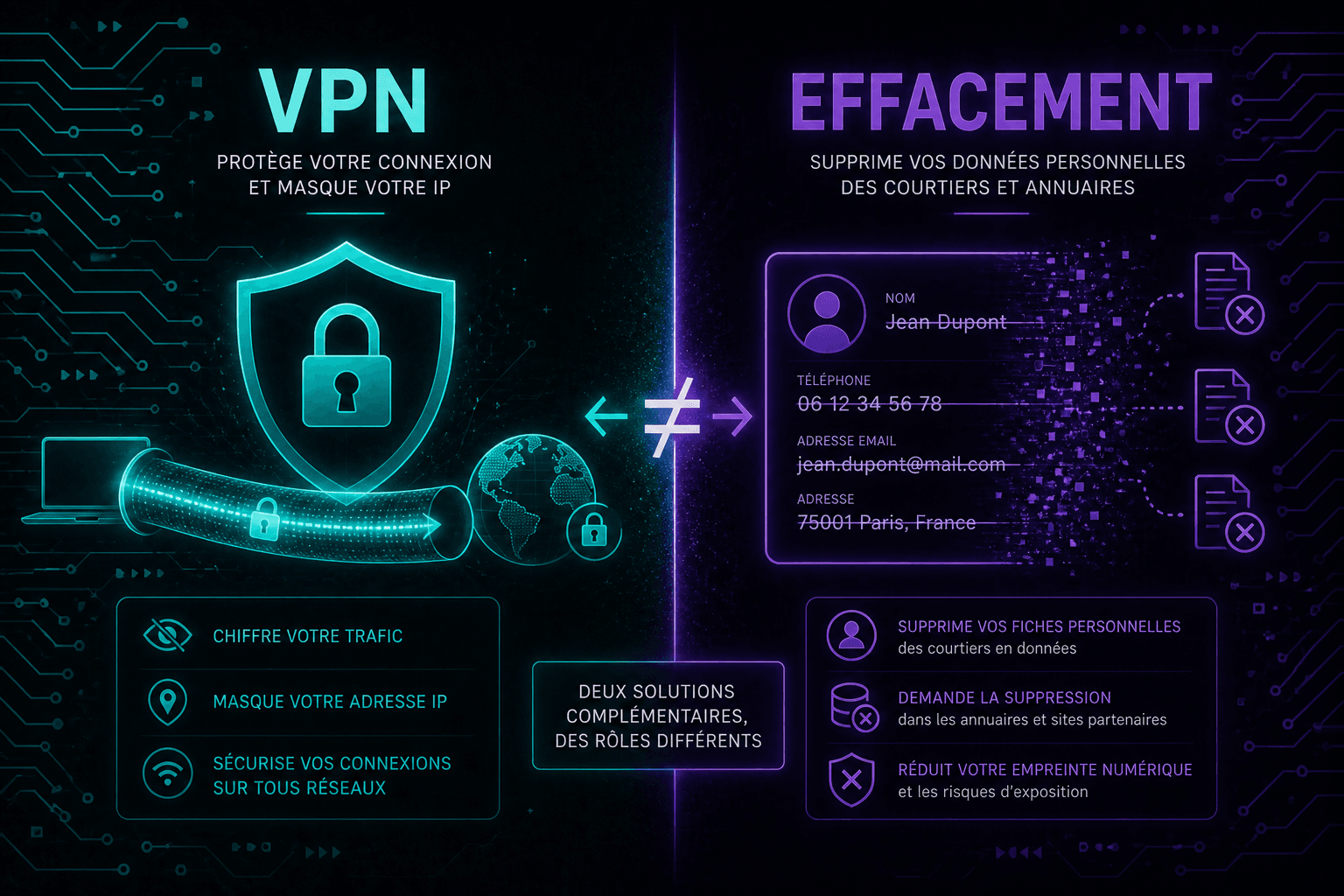
- Buying a bundle without checking your need. VPNs, antivirus tools and password managers can be valuable, but they do not perform broker removal merely by being installed.
Our Incogni, CrabClear and Data Knight comparison explains differences in scope and payment models. It is a provider-authored comparison, not an independent ranking.
How to choose a service
Five criteria to check
- Broker and web coverage: which sources are actually supported, and which matter to your exposure? Open-web findings are a separate capability from a broker catalogue.
- Depth of managed work: who drafts, submits and follows up requests? Which steps still need your approval or verification?
- Monitoring frequency: a one-off check is a snapshot. A recurring plan may fit a situation where records regularly reappear.
- Privacy and GDPR handling: look for clear authorisation, a readable privacy policy, processing locations, subprocessors and retention rules. Consult Data Knight's privacy policy, rather than assuming that a provider's nationality determines all processing locations.
- Transparency: can you see sent requests, replies, refusals and outstanding actions separately? An initial assessment helps you understand the scope before paying.
Match the service to your situation
| Situation | Likely priority |
|---|---|
| Your information appears in a known breach | Secure affected accounts, replace reused passwords and review other exposure |
| You have a public profile | Public web, brokers and social accounts; possibly reputation management |
| You have little public activity but receive unwanted contact | Directories, brokers and the applicable marketing-objection channels |
| You live in the EU | Applicable data rights and clear authorisation. See your rights |
| You notice suspicious account or financial activity | Contact the affected organisations promptly, alongside any longer-term cleanup |
Tip: do not choose the most expensive package by default. Choose coverage that matches your actual findings. An assessment can help you decide.
Summary
Identity misuse can exploit information already exposed through brokers, public pages, breaches and social accounts. A suitable service should explain what it detects, what action it can take and how you can track the outcome.
In France and the EU, compare relevant sources, GDPR request handling, tracking, privacy practices and the opportunity to assess your needs before paying. Data Knight follows that sequence: assessment, authorisation, requests and follow-up, with limits where information may lawfully be retained.
Want to see supported findings before choosing a subscription? Start your free assessment, without a payment card. When ready, Remove my data lets you choose targets and follow requests.
Read next: Data removal service guide · Incogni, CrabClear and Data Knight compared · Digital footprint and GDPR erasure guide · GDPR Article 17