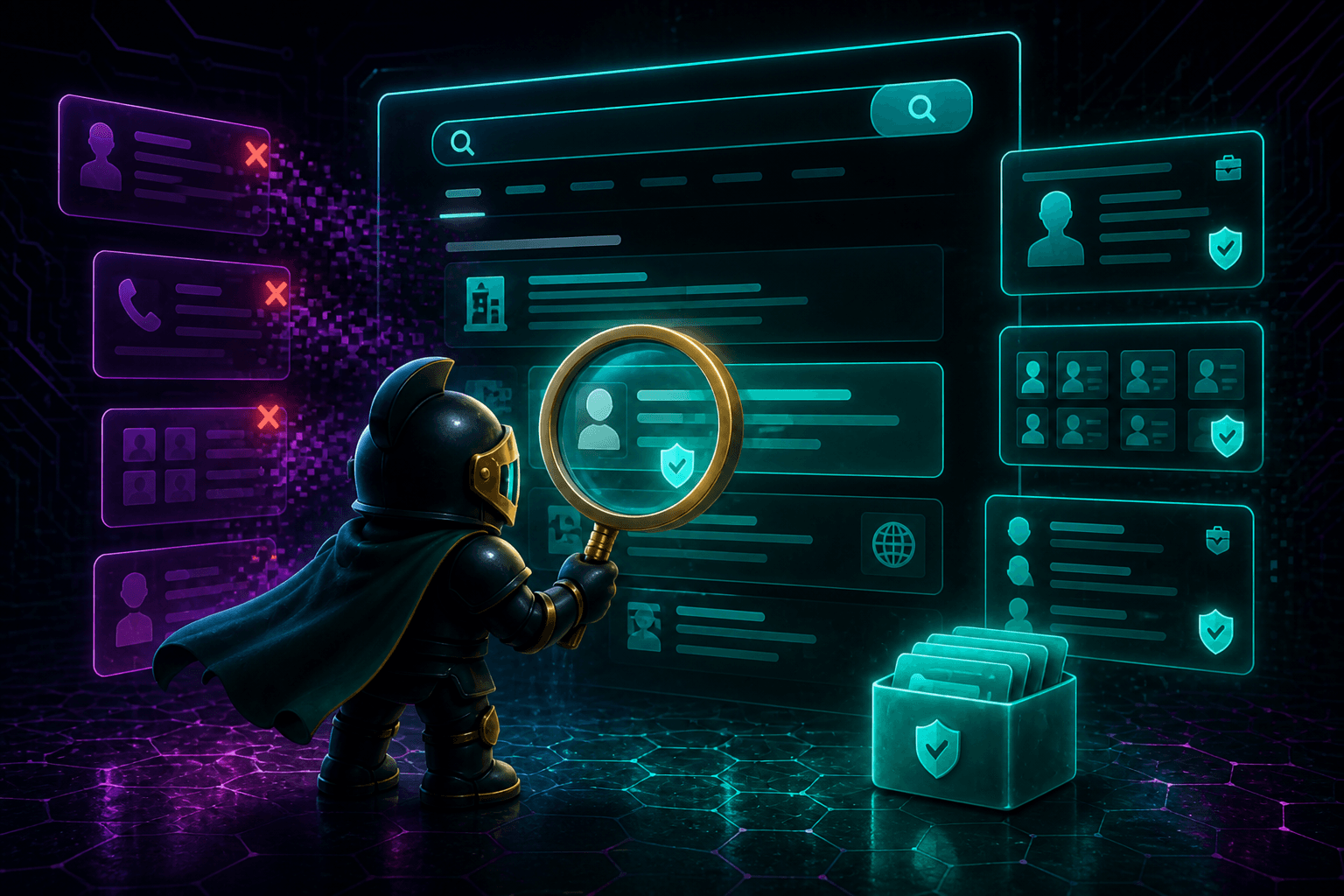
A namesake, someone with the same name as you, can influence what other people find when searching online. A recruiter, customer or stranger may confuse a search result with your own history. Sharing a name does not establish that a page is about you. Here is how mistakes arise and five practical ways to address them.
You may have more namesakes than you think
French surname and first-name data show how common names recur across generations. Martin is a familiar example. However, the INSEE surname dataset covers births over 1891–2000. Its counts should not be presented as a current census of living people with a particular surname.
The INSEE first-name dataset similarly illustrates how names such as Louise, Jade, Gabriel and Raphaël recur. A common first name combined with a common surname can describe many different people.
The practical implication is simple: a Google result for a name such as “Pierre Dupont” or a professional record for “Sophie Martin” does not identify one unique individual. Context matters.
Three ways mistaken identity can affect everyday life
1. Recruitment and professional opportunities
A recruiter may search a candidate's name before an interview. A result could refer to a namesake's legal dispute, an outdated job profile or a controversial comment. If the reader fails to check the context, it may create an inaccurate impression.
This does not mean every recruiter searches every candidate or rejects them based on an ambiguous result. It means clear professional information and correction of inaccurate associations can help prevent confusion. France Travail offers advice on managing your online reputation during a job search.
Confusion can also be harmless but inconvenient, such as potential customers mixing up two professionals in entirely different fields.
2. Banking, credit and rental records
An inaccurate match in a named database may associate a person with someone else's records. If you discover such an error, document the specific association and request correction. A decision affecting you should not be attributed to a namesake solely because a search result exists: obtain information about the actual record or decision where possible.
3. Privacy and harassment
A person may receive abusive messages or have a photograph wrongly circulated in connection with something a namesake did. Social profiles can be confused across Facebook, LinkedIn, Instagram and other platforms.
If this happens, preserve evidence, report the inaccurate association and use the platform's privacy or harassment process. A simple name match is not evidence that you were involved.
Why search results and broker records can be confusing
Search engines display pages matching a query. Several pages for the same name may concern different people. The appearance of a result does not mean the search engine has verified that every mention belongs to you.
Data brokers may combine heterogeneous sources, including directories, public records and commercial databases. Matching mistakes can create mixed profiles, and copies of an inaccurate association may spread to other services.
That is why a rights request should identify the specific record and error, with enough proportionate context to distinguish you. A request containing only a common name may not let the recipient reliably identify the data concerned.
Five practical steps
1. Search for yourself periodically
Set aside a few minutes, for example each quarter, to search:
- your first name and surname;
- your name and city;
- your name and employer;
- your name and profession.
Review which results concern you and which clearly belong to somebody else. Search results vary, so this is a useful check rather than a complete record of what everyone sees.
2. Keep a clear professional profile
If you use LinkedIn or another professional platform, accurate experience, role and employer information can help readers distinguish you from namesakes. Add only details you are comfortable making public.
A clear profile does not guarantee a first-place Google ranking, and LinkedIn is not mandatory. The aim is to provide reliable context where you choose to have a public professional presence.
3. Request correction of inaccurate associations
Alongside erasure under Article 17, GDPR Article 16 provides a right to correct inaccurate personal data. If a site wrongly attaches your details to another person's record, explain the error and request correction where the GDPR applies.
Do not ask to delete accurate information about somebody else merely because they share your name. For your own information in search results, read about Google delisting.
4. Use a scan that considers context
Data Knight's assessment considers identifying information and contextual signals rather than relying only on a name match. Relevant context can include:
- an email address or phone number, while recognising that identifiers can be shared or reassigned;
- name and context, such as city, employer, school or a profile;
- matching and review signals used to assess whether a result is relevant.
No matching system is infallible. Ambiguous results require care, and your review remains important before requests are sent. Read how Data Knight handles namesakes.
5. Exclude false positives
When reviewing your digital footprint report, use “This isn't me” on a result that belongs to someone else. This helps keep the selection for removal focused on your own information.
You know your own history better than an automated system. Review results rather than treating every match as confirmed exposure.
You cannot remove namesakes, but you can correct confusion
You can:
- identify what appears for your name on public websites and through brokers;
- distinguish relevant traces from false positives;
- request correction or eligible erasure of inaccurate associations;
- maintain clear public information where you choose to have a professional profile.
To review where your name appears, start a free scan. It covers the public web, relevant broker sources and known breaches, and lets you exclude results that are not yours. When you are ready, choose what to address and track your removal requests.
Sources
- INSEE: surname dataset covering 1891–2000 births and first-name dataset.
- France Travail: managing your online reputation while looking for work.
See also: Remove your name from Google · Google delisting · People search removal · Online reputation services